人工知能の歴史:チューリングからエージェントスキルに至る道程
537 Views
June 17, 26
スライド概要
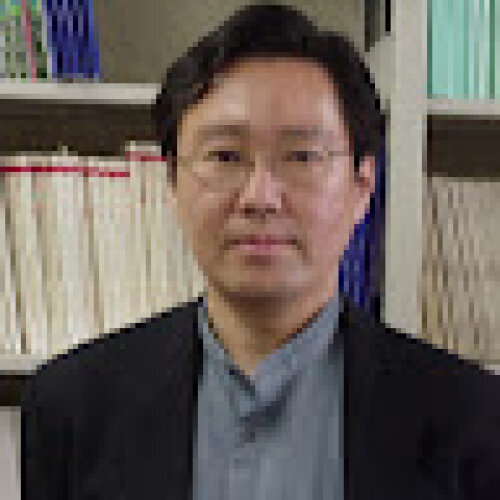
MIKIO KUBO is a professor at Tokyo University of Marine Science and Technology, a director (CTO) at MOAI Lab, a director at A* Quantum, and an adviser at Optimind. He works on supply chain management (SCM) with an emphasis on optimization and machine (deep) learning. He founded Supply Chain Risk Management Forum and MOAI Forum.
関連スライド

各ページのテキスト
人工知能の歴史 チューリングからエージェントスキルに至る道程 MOAI Lab June 17, 2026 1 / 26
本スライドの構成 1 人工知能の黎明と記号主義 2 統計的言語モデルからトランスフォーマーへの転換 3 大規模言語モデルとスケーリング則 4 アライメント、推論モデル、AI エージェント 5 自律型エージェントとエージェントスキル 2 / 26
黎明期から AI の冬まで 年代 出来事 意義 1950 1956 1966 1970 年代 1980 年代 チューリングテスト ダートマス会議 イライザ マイシン AI の冬 知能判定を言語対話に置いた AI 分野を確立した 対話システムの先駆けとなった 専門知識のルール化を示した 記号主義の限界が顕在化した 5 / 26
記号主義から統計主義へ 1990 年代以降、インターネットと計算資源の拡大により、大規模データから学習す る方向へ移行した 機械学習は、明示的なルールではなく、データに含まれる統計的パターンを獲得す る方法 [2] ディープラーニングは、特徴量を人手で設計するのではなく、多層ニューラルネッ トワークで表現を学習する この転換が、後の大規模言語モデル、LLM、の基礎となった 6 / 26
アライメントとチャット GPT アライメントは、モデル出力を人間の意図、価値、制約に合わせるための技術群 インストラクト GPT は、人間のフィードバックによる強化学習、RLHF、を用いて 指示追従性能を高めた [18] チャット GPT は、LLM を一般利用可能な対話インターフェースとして普及させた [15] GPT-4 は、より高い汎用性能と複雑タスクへの対応を示した [16] 10 / 26
推論モデルの特徴 観点 従来型 LLM 推論モデル 振る舞い 得意領域 計算負荷 検証 即時生成が中心 要約、対話、生成 入力長に依存 外部指示に依存 推論ステップを内部展開 数学、コード、論理問題 思考の深さに依存 自己修正を組み込みやすい 12 / 26
エージェントスキルの位置づけ エージェントスキルは、指示書、スクリプト、テンプレート、参照資料をまとめた 作業単位 MCP は外部世界への接続路であり、エージェントスキルはその接続路をどう使うか という手順 段階的開示により、必要な知識だけをエージェントに読み込ませられる 組織固有のルール、データ、実行手順を組み込むことで、AI エージェントを業務に 適合させる 16 / 26
まとめ 1 AI は、記号論理から統計的学習へ、さらに LLM へと発展した 2 トランスフォーマーは、大規模並列学習と文脈理解の基盤となった 3 アライメントと推論モデルは、LLM をより実用的な知的基盤へ押し上げた 4 AI エージェントは、対話から行動へと AI の役割を拡張した 5 エージェントスキルは、AI エージェントを実務で使うための具体的なレシピ 17 / 26
参考文献 I [1] Dzmitry Bahdanau, Kyunghyun Cho, and Yoshua Bengio. Neural machine translation by jointly learning to align and translate. arXiv preprint arXiv:1409.0473, 2014. [2] Christopher M. Bishop. Pattern Recognition and Machine Learning. Springer, 2006. [3] Tom B. Brown, Benjamin Mann, Nick Ryder, Melanie Subbiah, Jared Kaplan, Prafulla Dhariwal, Arvind Neelakantan, Pranav Shyam, Girish Sastry, Amanda Askell, Sandhini Agarwal, Ariel Herbert-Voss, Gretchen Krueger, Tom Henighan, Rewon Child, Aditya Ramesh, Daniel Ziegler, Jeffrey Wu, Clemens Winter, Christopher Hesse, Mark Chen, Eric Sigler, Mateusz Litwin, Scott Gray, Benjamin Chess, Jack Clark, Christopher Berner, Sam McCandlish, Alec Radford, Ilya Sutskever, and Dario Amodei. Language models are few-shot learners. 18 / 26
参考文献 II Advances in Neural Information Processing Systems, 33:1877–1901, 2020. [4] CrewAI. Crewai documentation. Project documentation, 2024. [5] DeepSeek-AI. Deepseek-r1: Incentivizing reasoning capability in llms via reinforcement learning. arXiv preprint arXiv:2501.12948, 2025. [6] Jacob Devlin, Ming-Wei Chang, Kenton Lee, and Kristina Toutanova. Bert: Pre-training of deep bidirectional transformers for language understanding. arXiv preprint arXiv:1810.04805, 2018. 19 / 26
参考文献 III [7] Sepp Hochreiter and J”urgen Schmidhuber. Long short-term memory. Neural Computation, 9(8):1735–1780, 1997. [8] Jared Kaplan, Sam McCandlish, Tom Henighan, Tom B. Brown, Benjamin Chess, Rewon Child, Scott Gray, Alec Radford, Jeffrey Wu, and Dario Amodei. Scaling laws for neural language models. arXiv preprint arXiv:2001.08361, 2020. [9] LangChain. Langchain documentation. Project documentation, 2024. [10] LangChain. Langgraph. Project documentation, 2024. 20 / 26
参考文献 IV [11] James Lighthill. Artificial intelligence: A general survey. Artificial Intelligence: a paper symposium, 1973. Basis for the UK AI funding review often linked to the first AI winter. [12] John McCarthy, Marvin L. Minsky, Nathaniel Rochester, and Claude E. Shannon. A proposal for the dartmouth summer research project on artificial intelligence, 1955. Workshop proposal for the 1956 Dartmouth conference. [13] Marvin L. Minsky. Neural nets and the brain model problem, 1954. Princeton University doctoral dissertation; includes discussion of SNARC (1951). [14] Yohei Nakajima. Babyagi. GitHub repository, 2023. 21 / 26
参考文献 V [15] OpenAI. Introducing chatgpt. OpenAI Blog, 2022. [16] OpenAI. Gpt-4 technical report. arXiv:2303.08774, 2023. [17] OpenAI. Learning to reason with llms. OpenAI technical report, 2024. [18] Long Ouyang, Jeffrey Wu, Xu Jiang, Diogo Almeida, Carroll Wainwright, Pamela Mishkin, Chong Zhang, Sandhini Agarwal, Katarina Slama, Alex Ray, et al. Training language models to follow instructions with human feedback. Advances in Neural Information Processing Systems, 35:27730–27744, 2022. 22 / 26
参考文献 VI [19] Joon Sung Park, Joseph O’Brien, Carrie Cai, Meredith Ringel Morris, Percy Liang, and Michael S. Bernstein. Generative agents: Interactive simulacra of human behavior. Proceedings of the 36th Annual ACM Symposium on User Interface Software and Technology, 2023. [20] Alec Radford, Karthik Narasimhan, Tim Salimans, and Ilya Sutskever. Improving language understanding by generative pre-training. OpenAI Technical Report, 2018. [21] Alec Radford, Jeffrey Wu, Rewon Child, David Luan, Dario Amodei, and Ilya Sutskever. Language models are unsupervised multitask learners, 2019. OpenAI technical report. 23 / 26
参考文献 VII [22] Significant Gravitas Team Richards. Auto-gpt: An autonomous gpt-4 experiment. GitHub repository, 2023. [23] Stuart Russell and Peter Norvig. Artificial Intelligence: A Modern Approach. Prentice Hall, 3rd edition, 2010. [24] Edward H. Shortliffe. Computer-Based Medical Consultations: MYCIN. PhD thesis, Stanford University, 1976. [25] Alan M. Turing. Computing machinery and intelligence. Mind, LIX(236):433–460, 1950. 24 / 26
参考文献 VIII [26] Ashish Vaswani, Noam Shazeer, Niki Parmar, Jakob Uszkoreit, Llion Jones, Aidan N. Gomez, Lukasz Kaiser, and Illia Polosukhin. Attention is all you need. Advances in Neural Information Processing Systems, 30, 2017. [27] Jason Wei, Xuezhi Wang, Dale Schuurmans, Maarten Bosma, Brian Ichter, Fei Xia, Ed Chi, Quoc Le, and Denny Zhou. Chain-of-thought prompting elicits reasoning in large language models. Advances in Neural Information Processing Systems, 35:24824–24837, 2022. [28] Joseph Weizenbaum. ELIZA—a computer program for the study of natural language communication between man and machine. Communications of the ACM, 9(1):36–45, 1966. 25 / 26
参考文献 IX [29] Michael Wooldridge. An Introduction to MultiAgent Systems. Wiley, 2nd edition, 2009. [30] Qingyun Wu, Gagan Bansal, Jieyu Zhang, Yiran Wu, Bill Yuchen Li, Erkang Zhu, Li Jiang, Xiaoyun Zhang, Sicong Liu, Ahmed Hassan Awadallah, Ryen W. White, Doug Burger, and Chi Wang. Autogen: Enabling next-gen llm applications via multi-agent conversation. arXiv preprint arXiv:2308.08155, 2024. [31] Shunyu Yao, Jeffrey Zhao, Dian Yu, Nan Du, Izhak Shafran, Karthik Narasimhan, and Yuan Cao. React: Synergizing reasoning and acting in language models. arXiv preprint arXiv:2210.03629, 2023. 26 / 26