特集 : インタビュー 松本良多 – O-MEE 2023
>100 Views
November 27, 23
スライド概要
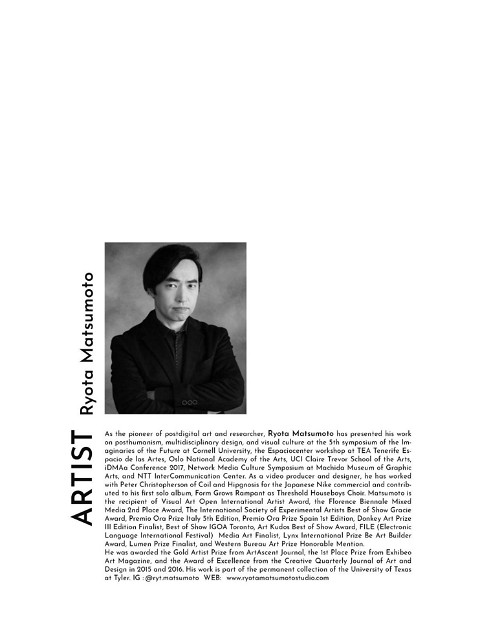
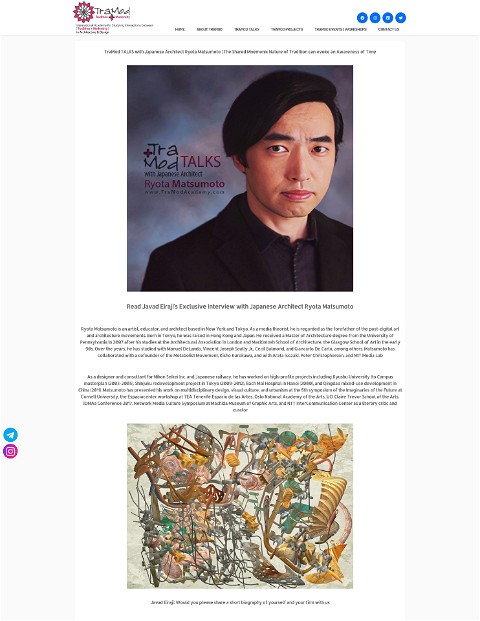
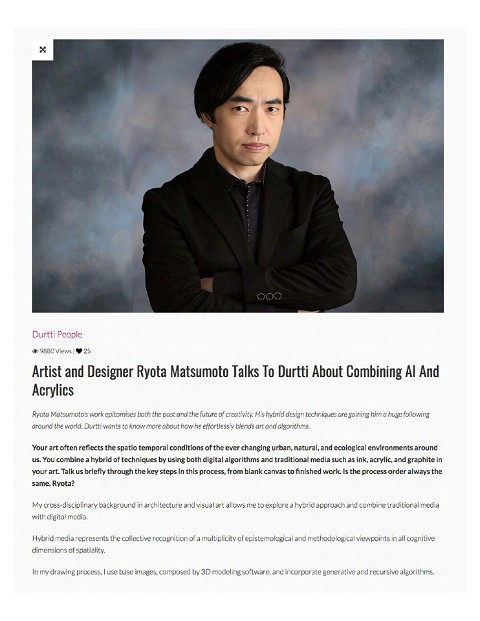
松本良多は東京出身のニューヨークを拠点として活動するアーティスト、建築デザイナー、アーバンプランナー、教育者。
10代を香港とマンハッタンで過ごした後、ロンドンのAAスクール、グラスゴー美術大学、マイアミ大学にて建築と哲学を学び、2007年ペンシルベニア大学大学院芸術学部建築学科を首席で卒業する。マニュエル・デランダ、ヴィンセント・ジョゼフ・スカーリー、セシル・バルモンド、 ジャンカルロ・デ・カルロに師事する。
90年代よりMITメディアラボ、磯崎新、黒川紀章、インダストリアル・ミュージックの先駆者、ピーター・クリストファーソンと協働し、ベトナムバクマイ病院、九州大学センター地区のマスタープランをはじめ多数の建築、都市計画、アートのプロジェクトを手掛ける。ポーランドのシレジア大学の講師を経て、2016年よりプリマス大学 Transart Instituteの客員教授に就任、クーパー・ユニオン、プラット・インスティテュート、コーネル大学、ニューセンター・オブ・リサーチ・アンド・プラクティス シアトル校にてゲストレクチャラーとして教鞭をとっている。シカゴ市文化庁客員キュレーター、英国美術協会 (British Art Network) 名誉会員。
オスロ国立美術大学、カリフォルニア大学アーバイン校、テネリフェ市立美術館にて加速主義、ポストヒューマニズムについて講演している。2017年にはレバーヒューム・トラスト国際学会の招聘によりコーネル大学にて「ポストヒューマニズムと未来都市」について講演する。2019年にはロンドンICAにて「トランスヒューマン社会と生成の唯物論」のレクチャーをキュレート、2020年以降はロージ・ブライドッティとのクリティカル・ヒューマニズムについての講義、エドワード・カックとのカリフォルニア大学アーバイン校でのワークショップと多岐な分野で活動している。
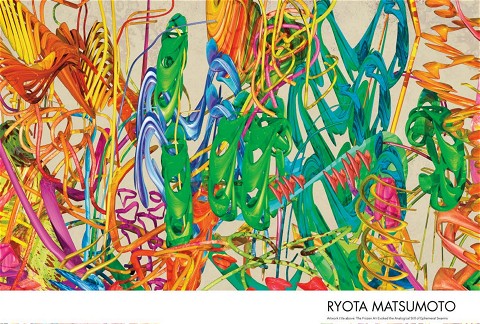
ハイブリッド・アートとアルゴリズミック・コンピュテーションの手法を応用したメディア・アートの作品のインターナショナルな評価によりFILE(Electronic Language International Festival)Prix Lux Finalist、英国 Visual Art Open International Artist Awardを受賞する。
2016年には日本人として初めてイタリアとスペインからPremio Ora賞を同時に受けて2015年、2016年、2017年にロサンゼルスのLos Angeles Center for Digital Art、BYTE Gallery トランスベニア大学、ArtSpace ペスカラにて個展を開催する。2018年、韓国国立中央博物館の招聘展、テキサス大学、 ロサンゼルス現代美術館の常設展示作品のアーティストに選ばれている。

関連スライド

各ページのテキスト
o-mee Home About Publications Timeline Team FAQs Whitepaper Ryota Matsumoto: Feature Interview matt | March 9, 2023 We’re thrilled to share artist Ryota Matsumoto’s feature interview with O-MEE. Ryota Matsumoto is an artist, educator, and architect based in New York and Tokyo. Born in Tokyo, he was raised in Hong Kong and Japan. He received a Master of Architecture degree from the University of Pennsylvania in 2007 after his studies at the Architectural Association in London and Mackintosh School of Architecture, the Glasgow School of Art in the early 90s. Matsumoto has previously collaborated with a cofounder of the Metabolist Movement, Kisho Kurokawa, and with Arata Isozaki, Peter Christopherson, and MIT Media Lab. He has taught architecture, art, and interdisciplinary design as a lecturer and visiting critic in the United States, Europe, and Japan. O-MEE: Can you provide a brief overview of your background and how you got started in the art world? Ryota: I studied both painting and art history before embarking on my career as an architect, so I have a long-standing interest in how the two fields, art and design have evolved and interacted with each other in the process of creative thinking, especially in the late 1960s, as that period is when the artists began to embrace the notion of design praxis that permeated our daily lives. Case in point: the artists inspired by the biodigital discourse of second-order cybernetics, the Spaceship Earth theory of Buckminster Fuller, and the anarchist doctrine of the Situationist International. They are early practitioners who crossed the boundary between art and architecture by incorporating foldable space frame structures, wearable apparatus, multiple slide projectors, and consumer electronics. Obviously, Steve Baer, Tony Martin, and Ken Isaacs, to name a few, are the prominent instigators of the multidisciplinary art practice in that period, and their work certainly inspired me to engage and practice in the multimedia and transversal context as an architect. O-MEE: Can you talk about the process-oriented approach to your work? Ryota: My creative approach incorporates a symptomatic reading that is ascribed to the intertextual encoding of underlying subsystems that are immanent in architectural, ecological, and sociocultural milieus. The process thereby essentially captures the cognitively latent and implicit narrative of art objects as opposed to the recent trend of surface reading, which is designed to interpret the perceptible and theorematic aspects of sensual objects in a semantic context. Consequently, I focus on the underlying presuppositions beneath the surface structures of an urban assemblage comprising heterogeneous and unconscious attributes that enter into relations with one another. The process-oriented strategy embraces the genealogical interpretation of society and hence decodes the immanent axiomatic of capitalist society. In regard to creative practice, one can reinterpret even daily commodities by exploring multilayered meanings and the metaphorical counterpoint that are ubiquitous in their metaphysical dimensions.
O-MEE: How do you approach the creation of a new piece from the initial concept to the final product? Ryota: One of my artworks initially started out as several fragmentary variants that were derived from the elements of my previous works. They were then merged into the artwork through the application of a recursive algorithm and its embedded matrices of transition probabilities. Consequently, the new work captures and appropriates some of the conceptual substructures of the previous works, while it can stand on its own as a self-referential assemblage. There is also a common thread with regard to visual abstraction in my work: the multiplicity of hybrid objects that unfold within their own spatiotemporal coordinates of phase space and are transcribed to an image plane. In that regard, the creative process of drawing henceforth can be defined as the swirls of virtual intensities that are reconfigured as the cartography of spatiotemporal reality. O-MEE: How do you feel about the integration of new technology in the art world and its impact on the creation and distribution of art? Ryota: There is a growing community of independent artists who can engage in the visual arts without the support of established intermediaries, and we are certainly witnessing a paradigm shift in the creative industry. The introduction of digital, web-based agency also allows both art and design practice to be enmeshed and articulated in the collective system of transdisciplinary and cross-cultural communications. Clearly, in the past 10 years or so, artists increasingly embrace and subscribe to the social-ecological network ascribed to a participatory media perspective, which formulates a traversal form of phatic communication as well as a certain degree of autonomy for creative divergence. Hence, my impression is that technology-infused art practice has transformed into the vibrant and enduring theme of the capitalist socius. O-MEE: Can you discuss any techniques or tools you use to bring your work to life, such as digital software or traditional media? Ryota: I regard the exploration of digital technologies as the process of dissecting the flux of seamlessly contiguous movement-images that transpire in space-time dimensions, thereby slicing and capturing the decoded flow of the movement-image by assigning the specific coordinates within the intermeshed protocols of real-time, multi-agent interaction. That is diametrically opposed to the Euclidean, a priori notion of space that makes the universe deterministically predictable by restricting the number of variables in the spatial coordinates.
Moreover, visualization modelling algorithms, such as dynamic motion graphics, multi-body simulations, and isotropic re-meshing procedures, are the latest means to capture the becoming-actual of virtual possibilities in the spatial configuration. Accordingly, the software is employed to explore textual and interpretative schemata for decoding the space-time continuum that is immanent in art objects. O-MEE: Is there anything else you would like to share, and is there anything exciting you have coming up? Ryota: As far as the reflection of all this cultural communication and technological advancement is concerned, there have been significant transformations in the sociocultural configuration of new media and digital art. With the spread of blockchain technology, the growth of the digital economy, social networks, augmented immersive realities, and web-based participatory practice, we certainly need to reconcile with our perception of the underlying doctrines of what digital technology can bring about in the context of transversal communications. As far as we are aware, there is an inevitable advancement of digital hegemony through the micromanagement of surveillance and technological social control, wherein the geopolitics of data accumulation is deeply embedded in the capitalist axiomatic. As the biologist, Humberto Maturana once said, "We, human beings can do whatever we imagine, but we do not have to do all that we imagine and it is where our behaviors as socially conscious agents matter." That statement resonates with contemporary artists and designers, who should always perceive the sociocultural advancement of technology as a mixed blessing and embrace digital media for the enhancement and enrichment of multivalent textural ecologies through a sociocultural praxis. Learn more about Ryota’s work here →https://www.ryotamatsumotostudio.com/ < Previous Post o-mee Privacy Policy Terms of Use ©2023 O-mee. All rights reserved